
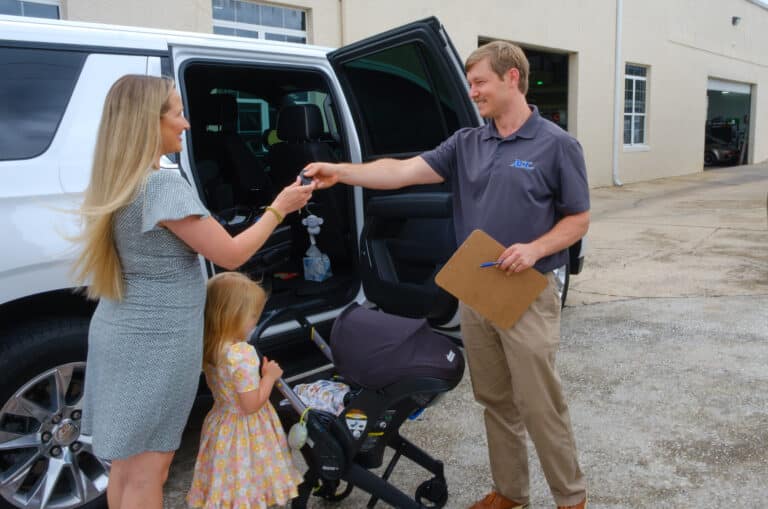
There is more to collision repair than most people realize. What may look like minor damage can involve underlying issues that need to be properly identified before repairs begin.
At All County Collision, we guide you through a clear, step-by-step process built around proper repair planning, consistent quality checks, and open communication. From your first visit to final pickup, you will have a better understanding of what is happening with your vehicle and why each step matters.
Our goal is to make the experience more manageable by giving you clarity, honest communication, and a clear path forward.
We begin with an in-person inspection or photo estimate to evaluate visible damage and understand your situation. During this step, our team gathers key information about your vehicle and the incident. You will have the opportunity to explain what happened, point out areas of concern, and ask any initial questions. We look for visible signs of damage, including:
Based on this initial inspection, we provide a preliminary estimate and explain what the next steps may look like. If additional or hidden damage is suspected, we will walk you through what that could mean for the repair process.
Once you review your estimate, you can move forward with scheduling your repair.
We go over the repair plan with you, explain what is included, and answer any questions you may have about parts, procedures, or the overall process. If your repair involves an insurance claim, we can help communicate and coordinate as needed.
At this stage, we schedule your drop-off date and begin preparing for your vehicle’s repair so the process can move forward in a more organized and efficient way.
After drop-off, your vehicle enters the initial production phase where we begin a deeper evaluation.
This step is critical because collision damage is not always fully visible at the surface. A complete disassembly allows us to properly assess structural, internal, and related damage before repairs move forward.
If additional damage is discovered, we will update the repair plan and communicate next steps with you.
Once all damage has been identified, we build a detailed repair plan based on your vehicle’s specific needs. This plan is developed using manufacturer repair procedures and includes the steps required to properly restore your vehicle. It also outlines how the repair will move through each stage of the process. Your repair plan include:
This step ensures that the repair is planned correctly before major work begins, rather than being figured out as the process goes.
Once the repair plan is finalized, we begin sourcing the parts required for your vehicle. Parts are selected based on proper fit, function, and compatibility with your specific make and model. When possible, we prioritize OEM-manufactured parts to help maintain the integrity and performance of your vehicle. Before installation, parts are:
This step is important because delays or incorrect parts can impact the repair timeline. By confirming parts early, we help keep the process moving in a controlled and organized way.
With parts ready and the repair plan in place, your vehicle moves into the body repair stage. Technicians complete all necessary repairs, which may include:
Each repair is performed based on the established repair plan, not guesswork. The goal is to return the vehicle to proper condition, not just improve appearance. Throughout this stage, work is checked before moving forward to ensure accuracy and consistency.
After body repairs are completed, the vehicle moves into the refinishing stage.
This process includes:
Paint is one of the most visible parts of the repair, but it also requires precision behind the scenes. Proper preparation and application help ensure a consistent finish across repaired areas.
Once completed, the finish is inspected before moving to the next stage.
After refinishing, your vehicle is carefully reassembled. All previously removed components are reinstalled, including:
Reassembly is done with attention to:
This step ensures that everything comes back together correctly, not just visually but functionally as well.
Modern vehicles rely on advanced driver assistance systems that must function properly after a collision repair. At this stage, we perform:
These systems may include sensors, cameras, and other components that support vehicle safety. Proper calibration helps ensure these features are working as intended after repairs are completed.
The final stage focuses on preparing your vehicle for return. Before delivery, your vehicle goes through:
The clean up process helps remove dust, residue, and any remaining signs of the repair process, so your vehicle is returned in clean condition. At pickup, we walk you through the completed repair, answer any questions, and make sure you feel comfortable before taking your vehicle.
Most customers do not deal with collision repair often, so the process can feel unclear at the beginning. Questions about what happens after the estimate, why disassembly is necessary, or why a repair plan may change are all common.
At All County Collision, the repair process is structured to answer those questions through a controlled approach. Each step has a purpose, from identifying all damage early to verifying repairs before moving forward. Instead of rushing through repairs, we focus on completing each stage properly so the next step can be done with confidence.
This structured approach helps create a more predictable experience. You are not left guessing what is happening with your vehicle, and the repair is handled with attention to detail from start to finish.

Collision repair today involves more than what is visible on the surface. Many vehicles include advanced materials, tight tolerances, and integrated safety systems that all need to be considered during the repair.
A clear process helps ensure that nothing important is missed. From accurate damage assessment to repair planning and final checks, each step plays a role in how your vehicle performs after the repair is complete.
Taking the time to follow the right steps also helps avoid issues that can come from incomplete or rushed repairs. When repairs are handled carefully and in the correct order, the result is a vehicle that is restored with attention to both function and overall condition.

One of the biggest frustrations in collision repair is not knowing what is happening or what to expect next. Questions about timing, costs, or changes in the repair are normal, especially when additional damage is found after disassembly.
At All County Collision, communication is built into the process. As your vehicle moves through each stage, we keep you updated so you have a clear understanding of progress and any changes that may come up.
If adjustments are needed, we take the time to explain what that means and what your options are. The goal is to keep you informed throughout the repair so you can move forward with confidence.

Understanding collision repair can make the process feel a lot more manageable. These videos cover common questions and topics like estimates, repair planning, parts, and what to expect during your repair.
Watch to get a clearer understanding of how repairs work and what matters when choosing the right shop for your vehicle.